CDU Awarded $6.9 Million CIRM Grant for Regenerative Medicine Workforce Training
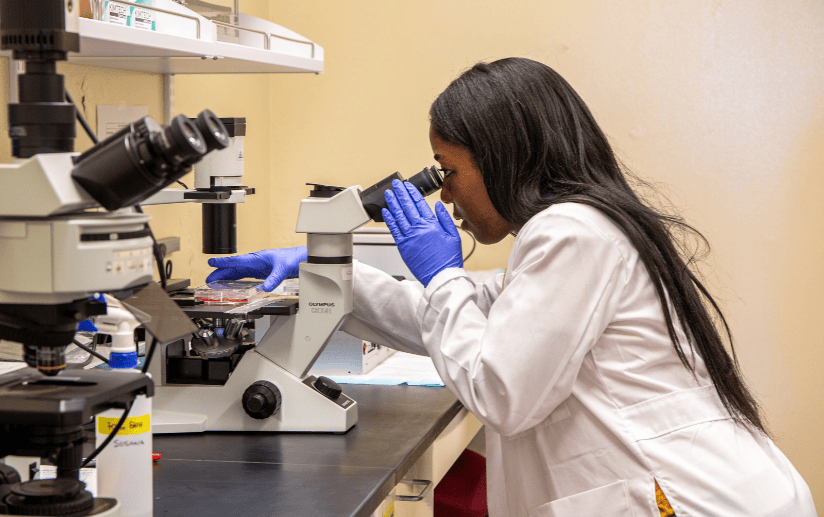
The Department of Health & Life Sciences (HLS) in the College of Science and Health (COSH) at Charles R. Drew University (CDU) has received a five-year, $6.9 million grant from the California Institute for Regenerative Medicine (CIRM) to establish the Building an Inclusive Regenerative Medicine Workforce (BIRM) Program.
The project, titled, “EDUC8-20314: Building an Inclusive Regenerative Medicine Workforce: A Dual-Path EDUC8 Training Program in Biomedical Sciences” was awarded through a partnership between CDU and The Lundquist Institute.
The program will create an educational pathway for approximately 18 undergraduate and master’s-level students enrolled in CDU’s Bachelor of Science and Master of Science programs in Biomedical Sciences. Through paid hands-on research internships, specialized coursework, mentorship, and professional development, students will gain experience and connections to help them enter California’s growing regenerative medicine workforce.
“This award reflects CDU’s commitment to advancing scientific innovation, workforce development, and health equity,” said Dr. Jorge N. Artaza, Principal Investigator and Professor and HLS Department Chair at CDU. “By creating accessible pathways into regenerative medicine and fostering meaningful community engagement, we are helping build a diverse workforce equipped to shape the future of biomedical discovery and patient care.”
A distinctive feature of the BIRM program is its collaborative approach to undergraduate and graduate training. Students will participate together in scientific seminars, professional development workshops, research presentations, networking activities, and community outreach initiatives.
The program will also provide paid, hands-on research internships that extend learning beyond the classroom. Depending on their interests, training level, and available placements, students may participate in research involving stem cell biology, tissue regeneration, molecular and cellular biology, disease modeling, and the development of innovative therapeutic approaches. They will work alongside experienced scientists at CDU, The Lundquist Institute, and participating in research laboratories and partner organizations.
Each trainee will be paired with a research mentor who will provide scientific guidance, help develop research skills, and support the student’s progress throughout the internship. The program will also encourage graduate students and more experienced trainees to serve as near-peer mentors for undergraduate participants.
“Our goal is to give students authentic research experiences that prepare them for careers in biotechnology, biomedical research, regenerative medicine, and advanced graduate or professional education,” said Dr. Artaza.
In addition to laboratory training, students will participate in professional development activities designed to strengthen their research and communication skills. These will include preparing research posters and abstracts, developing biostatistics and data analysis skills, and participating in scientific conferences. Students will also explore career opportunities in biotechnology, pharmaceutical research, academic research, clinical and translational science, and advanced graduate education.
“Our ultimate goal is not simply to train students to perform experiments, but to prepare the next generation of scientists who will contribute to discoveries, develop innovative therapies, and improve human health,” shared Dr. Artaza.
For more information about our programs visit the Bachelor of Science, Biomedical Sciences and Master of Science, Biomedical Sciences webpages.