Charles R. Drew University Marks National Latino Physician Day
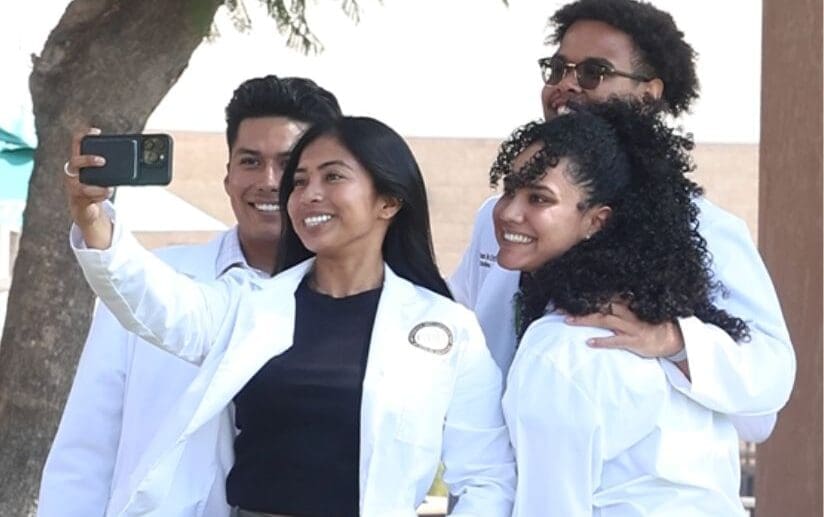
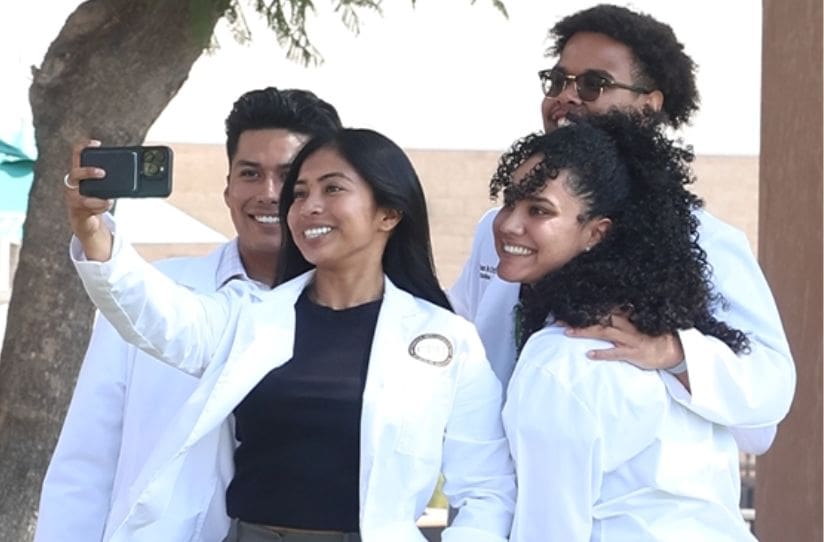
For the second consecutive year, CDU has marked National Latino Physician Day, an initiative aimed at increasing awareness of the crisis and need for more Latino and Latina doctors.
While 19% of the United States population identifies as Latino, only 6% of the nation’s physicians identify as such. In California, where 50% of the population is projected to be Latino, by 2050, an additional 37,000 Latino physicians are needed to reach parity.
Charles R. Drew University of Medicine and Science is helping address this shortage through producing physicians that are not only highly trained, but deeply rooted in the values of community, excellence, and compassion.
“Our students are driven by lived experiences and a deep commitment to serve,” said Dr. Margarita Loeza, Assistant Dean of Student Affairs and Admissions at CDU. “We meet that drive with a curriculum that integrates clinical training, cultural competence, and community engagement – addressing workforce shortages while ensuring all communities have access to compassionate care.”
For students like Eric Arauza, a second-year medical student, their own encounters with healthcare inequities have ignited their journey into medicine. Arauza remembers waiting hours outside an overcrowded community clinic with his family as a child.

“I grew up in a Latino family and community where many knew the importance of prioritizing one’s health, but they did not feel it was feasible to do so,” said Arauza. “Now as a medical student, I have met patients who are not able to prioritize their health because of systemic barriers such as immigration status and a lack of sick paid leave. This unfortunate reality has a large impact on preventable health conditions that are seen in my community.”
South Central Los Angeles student Leslie Corona faced similar circumstances.
“As a first-generation student whose parents immigrated from Mexico, I struggled with limited guidance at home when it came to getting into medical school, which often made the journey feel isolating,” she said. “I’ve realized we need more Latino doctors to help reduce the language barrier, make healthcare more accessible, and take up spaces that weren’t built for us so our voices are heard. Every brown kid should know they too can become doctors if that’s what they dream of, and together we can grow beyond the 6%.”