A Four-Year Pathway to Residency
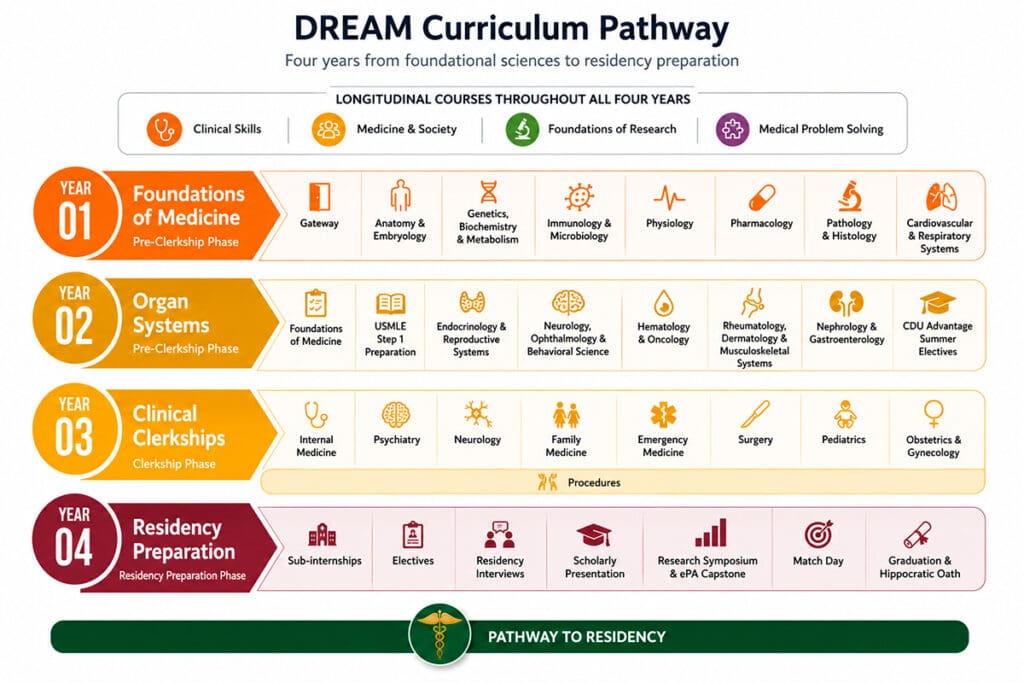
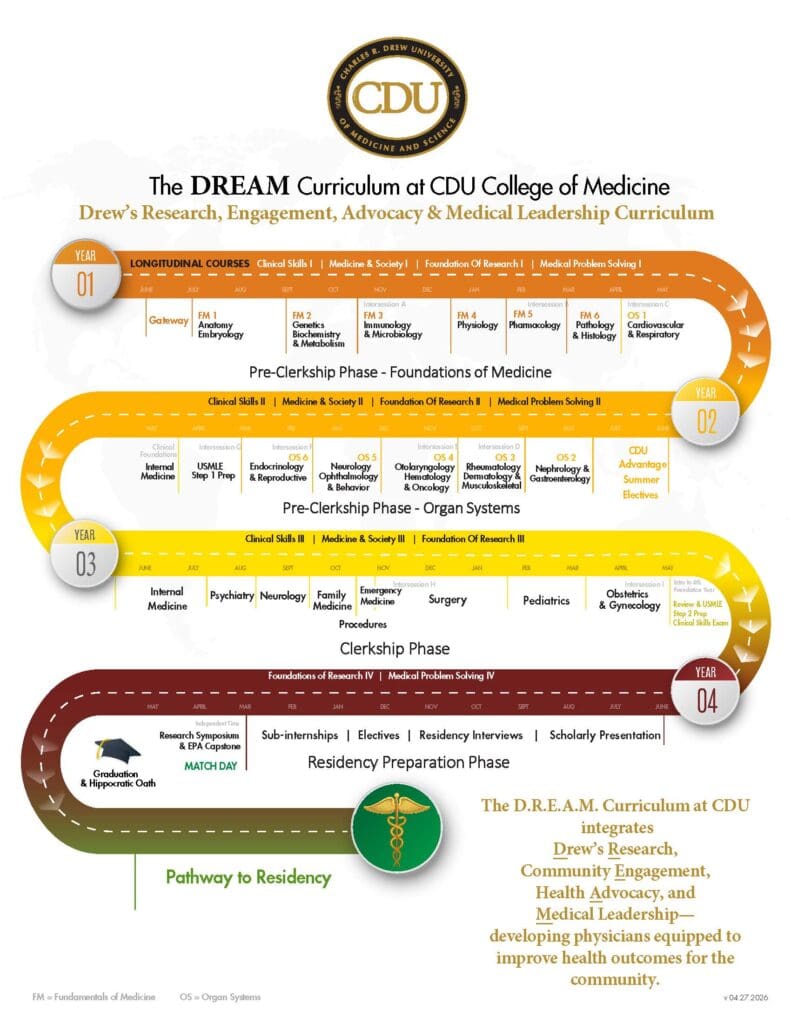
The DREAM Curriculum moves students through three connected phases that build progressively from foundational medical science to clinical practice and residency preparation.
- Phase One: Pre-Clerkship
Foundational science, organ systems, clinical reasoning, research, and early clinical skills - Phase Two: Clerkship
Core clinical rotations and hands-on patient-care experiences across major medical specialties - Phase Three: Residency Preparation
Sub-internships, electives, scholarly presentations, residency interviews, and advanced clinical preparation
Curriculum Phases and Longitudinal Learning
22 months
The first nine months focus on foundational sciences, including anatomy, embryology, genetics, biochemistry, metabolism, immunology, microbiology, physiology, pharmacology, pathology, and histology.
During the organ-systems portion of Phase One, students explore the pathophysiology, pharmacology, and clinical application of each major system. This prepares them for clinical rotations and required national medical examinations.
Longitudinal courses connect scientific knowledge, clinical reasoning, research, advocacy, and professional development throughout the four-year curriculum.
- Medicine and Society: Examines the physician’s role in society, with an emphasis on leadership, advocacy, health policy, community health, and health equity.
- Clinical Skills: Provides small-group instruction focused on patient communication, physical examination, clinical documentation, and essential patient-care competencies.
- Foundations of Research: Connects students with research mentors and guides them through scholarly projects that culminate in a research proposal and formal presentation.
- Medical Problem Solving: Strengthens clinical reasoning, critical thinking, and the application of scientific knowledge to patient care.
12 months
During the third year, students complete core clinical rotations at affiliated hospitals and clinics, gaining hands-on experience across major medical disciplines.
Core rotations include:
- Internal Medicine, 12 weeks
- Surgery, 10 weeks
- Pediatrics, 6 weeks
- Obstetrics and Gynecology, 6 weeks
- Family Medicine, 4 weeks
- Psychiatry, 4 weeks
- Neurology, 4 weeks
- Emergency Medicine, 2 weeks
- Procedures Course, 1 week
Students also work with preceptors whose specialties align with their professional interests, helping them explore career pathways and prepare for advanced clinical training.
12 months
The final phase focuses on advanced clinical experience, career readiness, scholarly work, and the transition to residency.
Students complete sub-internships, senior electives, and advanced rotations totaling at least 20 weeks. These experiences are primarily aligned with each student’s intended specialty and include exposure to critical care and acute care medicine.
Students also participate in residency interviews, complete their scholarly work, present their research, and prepare for Match Day and graduation.
Each student belongs to one of four Learning Communities named after distinguished physician-advocates.
Through these communities, students receive academic coaching, mentorship, professional development, peer support, and opportunities for social connection throughout the MD program.
Research is integrated across the curriculum rather than treated as a separate experience. Students work with faculty mentors, develop research questions, build scholarly projects, and present their findings during the fourth-year research symposium and capstone experience.
This process helps students develop the skills needed to evaluate evidence, contribute to medical knowledge, and address health challenges affecting underserved communities.
Preparing Physicians for Community Leadership
The DREAM Curriculum prepares students to become clinically skilled, research-informed, and community-responsive physicians.
Students learn to connect scientific knowledge with patient care, health advocacy, community engagement, and medical leadership. This integrated approach reflects the College of Medicine’s commitment to improving health outcomes in underserved communities.
A Clear Pathway to Residency
From the Gateway course and foundational medical sciences through clerkships, sub-internships, scholarly presentations, Match Day, and graduation, each stage of the DREAM Curriculum is designed to prepare students for the responsibilities of residency and professional medical practice.
The result is a four-year medical education experience grounded in scientific rigor, clinical excellence, research, advocacy, leadership, and service to the community.
Questions About the MD Curriculum?
Contact the College of Medicine for additional information about the DREAM Curriculum and the MD program.